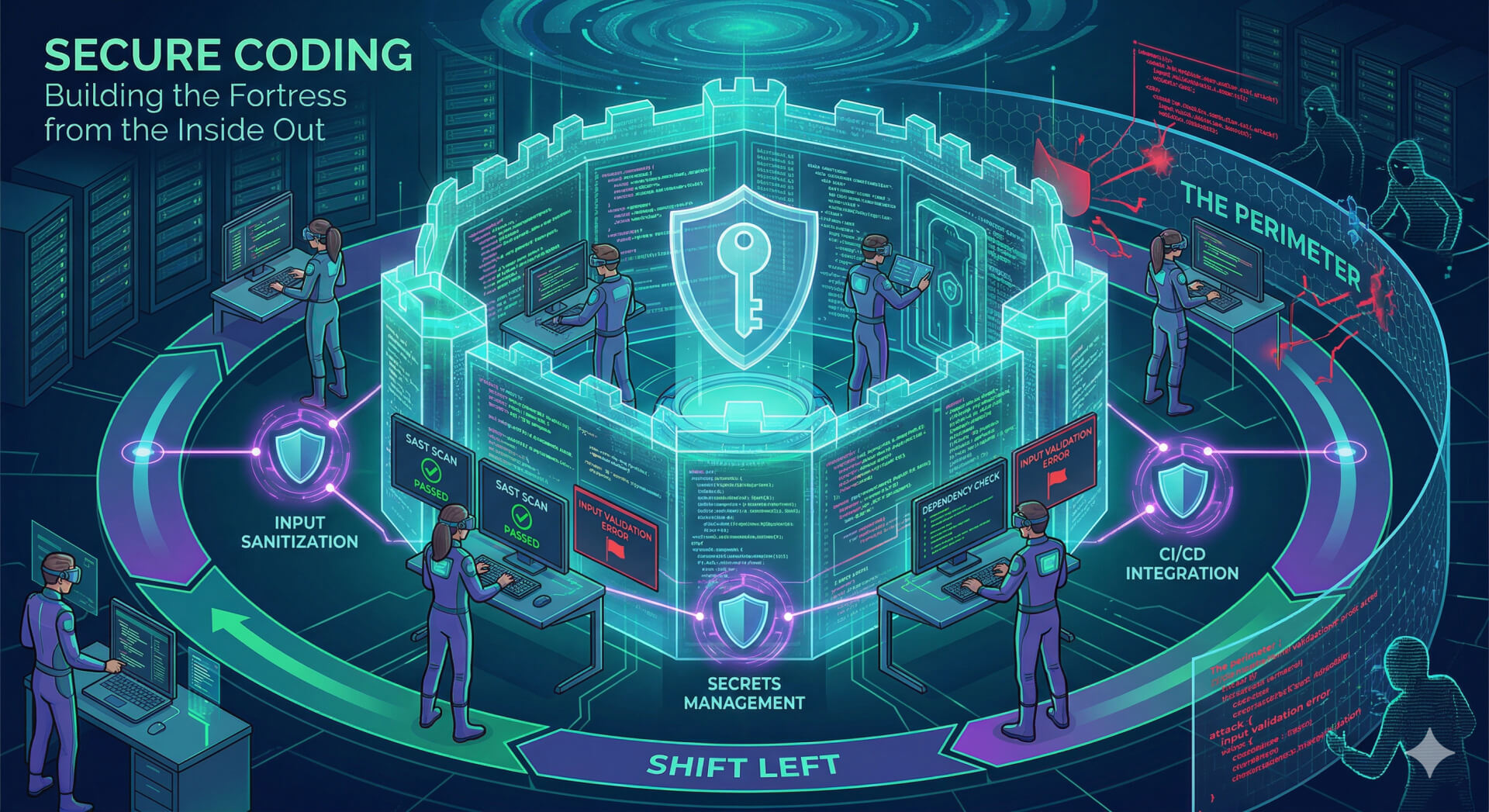
In 2026, “Shift Left” is no longer just a buzzword; it’s a survival tactic. As software supply chain attacks become the weapon of choice for sophisticated actors, the wall between “development” and “security” has finally crumbled. Secure coding has transitioned from being a final checkbox for the security team to a core responsibility for every developer and DevOps engineer.
The Three Pillars of Secure Development
To build resilient software in the modern landscape, teams must anchor their workflows in three fundamental practices:
-
Sanitize Everything (Zero Trust Data) The OWASP Top 10 continues to haunt the industry because basic input validation is still a common point of failure. Whether it’s SQL Injection or Cross-Site Scripting (XSS), the golden rule remains: never trust user-supplied data. Every entry point must be treated as a potential vector for exploitation.
-
Secret Management With AI-driven scanners constantly patrolling public and private repositories, a hardcoded API key is no longer a “minor oversight”—it’s an open invitation to your infrastructure. Modern security requires robust secret management tools that inject credentials at runtime, ensuring no sensitive data ever touches your version control.
-
Automated SAST/DAST Security is now a “spell-check” within the IDE. Static Application Security Testing (SAST) and Dynamic Application Security Testing (DAST) are embedded directly into the CI/CD pipeline. These tools flag vulnerable patterns and runtime risks before the first line of code is even committed to the main branch.
The Bottom Line
The economics of security are clear: patching a vulnerability in production costs 10x more than fixing it during the development phase. Secure coding isn’t about adding layers of complexity or writing more code; it’s about writing smarter code and building the fortress from the inside out.